
A True American Crime Epic About Power, Loyalty, Ambition, and the Price of Winning
Introduction: When American Dreams Run on Fast Horses and Faster Men
Some stories are too large to be fiction. Too strange to be invented. Too raw, too contradictory, too human to be smoothed into legend. My Buddy from Brooklyn is one of those stories.
Set against the turbulent backdrop of postwar New York, the golden age of American horse racing, and the shadowed corridors of organized crime, My Buddy from Brooklyn is a sweeping true-crime drama inspired by the astonishing life of Howard “Buddy” Jacobson—once one of the most successful racehorse trainers in the United States, later one of its most notorious fugitives.
This is not a nostalgia piece.
This is not a sanitized biopic.
This is not a mob movie that glorifies violence for spectacle alone.
This is a character-driven American epic about how success is built, how power is borrowed, and how everything eventually demands payment.
The World of the Film: Brooklyn, New York — 1930s to 1980s
Brooklyn was not a borough back then. It was a nation-state.
It had its own rules, its own hierarchies, its own currencies—respect, fear, loyalty, silence. From Bay Ridge to Bensonhurst, from racetracks to back rooms, Brooklyn bred men who understood systems before they understood morality.
My Buddy from Brooklyn spans three decades of American transformation:
-
The post-WWII boom
-
The rise of organized gambling
-
The glamour and corruption of elite horse racing
-
The sexual revolution
-
The cocaine years
-
The collapse of trust between institutions and individuals
The film uses Brooklyn not just as a setting, but as a character—a place that builds men up quickly and tears them down even faster.
Who Was Buddy Jacobson?
Howard “Buddy” Jacobson was not born into power. He earned it.
Starting as a stable hand and rising to become the winningest racehorse trainer in America, Buddy developed a reputation for intuition, aggression, and results. He understood animals. He understood people even better. Owners trusted him with millions. Gamblers followed his entries like stock tips.
At his peak, Buddy Jacobson was:
-
Training elite thoroughbreds
-
Winning hundreds of races per year
-
Operating across New York, Florida, and beyond
-
Socializing with models, financiers, and underworld intermediaries
-
Living a life that blurred the line between brilliance and recklessness
But success in Buddy’s world was never clean. And eventually, the same instincts that made him unstoppable also made him dangerous.
A Story About Systems — Not Just a Man
At its core, My Buddy from Brooklyn is not just about Buddy Jacobson. It’s about the systems that reward men like him—until they don’t.
The film explores:
-
How regulated industries quietly rely on unregulated behavior
-
How institutions tolerate rule-breakers while they are profitable
-
How power shields itself through silence
-
How ambition distorts loyalty
-
How love becomes leverage
Horse racing, like Wall Street or Hollywood, runs on winners. And winners are forgiven—until the moment they are no longer useful.
The Horse Racing World: Glamour, Money, and Unspoken Codes
Horse racing in the mid-20th century was a universe unto itself.
It attracted:
-
Old money
-
New money
-
Mob money
-
Dreamers
-
Hustlers
-
Aristocrats
-
Outlaws
Trainers like Buddy Jacobson were kings without crowns. They controlled schedules, chemistry, conditioning, and outcomes. Owners might write the checks, but trainers decided who won.
The film pulls back the curtain on:
-
Claiming races and ownership manipulation
-
The use of wives and proxies to shield assets
-
The gray areas between innovation and illegality
-
The politics of racing commissions
-
The quiet power of those who “knew where the bodies were buried”
This is not an exposé. It is an inside view.
Women, Desire, and Power
Unlike many crime films, My Buddy from Brooklyn treats its female characters as agents, not accessories.
The women in Buddy’s life were not passive spectators. They were models, entrepreneurs, lovers, confidantes, and catalysts. They influenced decisions, escalated conflicts, and, in some cases, altered history.
The film examines:
-
The modeling industry of the 1970s
-
The commodification of beauty
-
The transactional nature of relationships in elite circles
-
The cost of being desired by powerful men
-
The emotional fallout of ambition unchecked by empathy
Love in this world is never innocent. It is strategic, volatile, and often weaponized.
Crime Without Caricature
My Buddy from Brooklyn refuses caricature.
The criminals are not cartoon villains.
The authorities are not saviors.
The heroes are deeply flawed.
Violence is not stylized for pleasure—it is presented as consequence.
The film depicts organized crime as it truly functioned:
-
Business-first
-
Reputation-driven
-
Ruthless but pragmatic
-
Obsessed with order
-
Allergic to chaos
This realism is what makes the story unsettling—and unforgettable.
The Fall: When the Bill Comes Due
Every system eventually collects.
As Buddy’s world tightens, pressure mounts from every direction:
-
Legal scrutiny
-
Romantic entanglements
-
Financial exposure
-
Betrayals real and imagined
The film’s later acts explore paranoia, isolation, and the psychological toll of living beyond the law while pretending to live within it.
And then comes the moment that changes everything.
The event that turns a champion into a criminal.
The act that cannot be undone.
The escape that becomes legend.
A True Prison Escape That Defies Belief
One of the most astonishing sequences in My Buddy from Brooklyn—and one that remains almost unbelievable even today—is Buddy Jacobson’s real-life escape from custody.
Not through violence.
Not through tunnels.
Not through cinematic tricks.
He changed clothes and walked out the front door.
The film presents this moment not as triumph, but as a turning point—where myth overtakes man, and survival becomes exile.
Themes That Matter Today
Though set decades ago, My Buddy from Brooklyn speaks directly to modern audiences.
It asks:
-
What happens when ambition outruns ethics?
-
Who protects the winners?
-
When does success become a liability?
-
Can loyalty survive power?
-
Is reinvention possible—or is it a lie we tell ourselves?
In an era of collapsing trust in institutions, celebrity trials, and moral gray zones, this story feels disturbingly current.
A Film Built for the Big Screen
This is not a streaming afterthought.
This is not a disposable true-crime series.
My Buddy from Brooklyn is being developed as a major theatrical motion picture, designed for:
-
Cinematic scale
-
Prestige casting
-
Award-caliber performances
-
International distribution
-
Long-tail cultural relevance
The visual language draws from:
-
1970s American realism
-
Gritty New York cinematography
-
Period-accurate production design
-
Authentic locations and textures
Every detail matters. Because authenticity is the currency of credibility.
Why This Story Has Never Been Told — Until Now
Stories like this often remain buried for a reason.
They implicate too many people.
They challenge comfortable myths.
They expose how success really works.
My Buddy from Brooklyn exists because enough time has passed—and because the truth, when handled responsibly, has value.
This film does not seek revenge.
It seeks understanding.
For Investors, Studios, and Serious Audiences
This project is positioned at the intersection of:
-
Prestige crime drama
-
True American history
-
Character-driven storytelling
-
Marketable intellectual property
It appeals to audiences who appreciate:
-
Goodfellas
-
The Irishman
-
Donnie Brasco
-
Scarface
-
Casino
-
American Hustle
But it is not derivative. Its power lies in specificity.
A Living Project
This website is not static.
As the film moves through development, this platform will expand to include:
-
Production updates
-
Historical research
-
Character studies
-
Visual teasers
-
Behind-the-scenes insights
-
Press coverage
-
Event announcements
My Buddy from Brooklyn is not just a movie. It is a living narrative unfolding toward the screen.
Some men build empires.
Some men burn them down.
A few do both—and leave stories that refuse to die.
My Buddy from Brooklyn is one of those stories.
Welcome to the world behind the finish line.
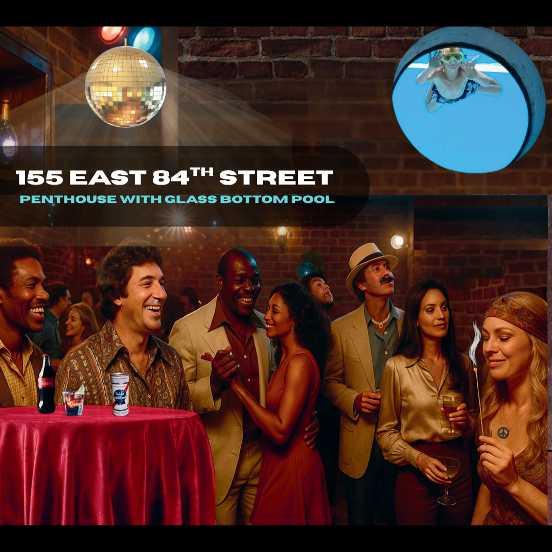
My Buddy from Brooklyn: The Movie tells the gut wrenching and entertainment value bringing true story of Howard “Buddy” Jacobson, the connected horse trainer who reinvented himself as a modeling agency kingpin and lived at the center of celebrity, fashion, and scandal. Surrounded by supermodels, actors, and socialites, Buddy’s life epitomized the glittering excess of 1970s Manhattan. But behind the velvet ropes and flashing cameras, his charm and ambition collided with jealousy, betrayal, and violence—culminating in the shocking 1978 murder of Jack Tupper, a crime that captivated headlines and sealed Buddy’s infamy.
More than a crime story, the film is a high-octane drama of power, glamour, and downfall—an irresistible blend of true-crime suspense and high-society spectacle. With millions at stake and a cast of unforgettable real-life characters, it delivers the kind of cinematic punch that grips audiences long after the credits roll.






| HOME | CAST | SCENES | CHARACTERS | KISMET | MERCH | SCRIPT |
Gural & Jacobson LLC is a boutique film and media production company developing bold, character-driven stories with real historical depth. Our flagship project, "My Buddy from Brooklyn"®, explores the extraordinary life of horseman, hustler, and New York nightlife legend Buddy Jacobson.
© 2025–2030 Gural & Jacobson LLC. All rights reserved.